
Every brand is obsessed with getting new customers. More traffic, more conversions, more first-time buyers.
But here's the question most brands can't answer: How much is that new customer actually worth to your business?
Not just their first purchase. Their total value over months or years of buying from you.
That's where Customer Lifetime Value (CLV) comes in. It's the metric that separates profitable growth from expensive vanity metrics. Because knowing whether a customer is worth $50 or $500 changes everything about how much you can afford to spend acquiring them.
This morning, we're breaking down how to calculate CLV, why it matters more than your acquisition costs, and the proven tactics that actually increase customer value over time.
Let’s get into it 👇
🧳 Storytelling That Converts: 121x ROI for Vagari Bags

Jake Hughes, Co-Founder of Vagari, had a premium product but his email strategy wasn't working. Klaviyo's high costs and lack of support made it hard to experiment and grow as a new brand.
His fix? Switch to Omnisend and pivot from product pitches to customer storytelling.
Jake built The Vagari Journal, real customer adventures featuring his products. With Omnisend's support team helping him optimize flows and test new ideas, he transformed generic product emails into compelling stories that made people want to join the community.
The results:
50% open rates (vs industry average of 20%)
6-7% SMS click rates
1:121 ROI across all campaigns
The lesson: The right platform + the right strategy = exponential growth.
See how Jake turned customer stories into his strongest marketing asset.
Customer Lifetime Value (CLV): The Metric That Tells You Who’s Really Worth It
We talk a lot about getting customers.
But what about making the most of the ones you already have?
That’s where customer lifetime value (CLV, or sometimes LTV) comes in.
It’s the metric that helps you answer one of the most important questions in eCommerce:
👉 How much is this customer worth to my business over time?
Let’s break down why it matters, how to calculate it, and how to improve it.
First, What is CLV?
Customer Lifetime Value is the total revenue you can expect from a single customer throughout their entire relationship with your brand.
Think of it like this:
If someone buys a $30 moisturizer once and never comes back, their CLV is $30.
But if they come back to buy it every month for two years? That’s $720.
CLV tells you which customers are loyal, which ones are valuable, and which ones are worth investing in.
Why CLV Matters (a Lot)
Most brands obsess over customer acquisition. Spend, spend, spend to get more people through the door.
But CLV shifts the focus to customer retention. And that’s where things start to get really profitable.
Here’s why it matters:
Smarter marketing spend: Knowing CLV helps you decide how much you can afford to pay to acquire a customer.
Better segmentation: It helps you identify and reward your most valuable customers with loyalty perks or VIP treatment.
Sustainable growth: Higher CLV means less reliance on ads and better margins over time.
How to Calculate CLV (With a Simple Formula)
There are a few ways to calculate lifetime value, but let’s keep it simple.
Here’s the classic formula:
CLV = Average Order Value × Purchase Frequency × Customer Lifespan
Let’s break that down:
Average Order Value (AOV) = Total revenue ÷ Number of orders
Purchase Frequency = Number of orders ÷ Number of customers
Customer Lifespan = How long (in months or years) a typical customer stays active with your brand
🧠 Let’s do a quick example:
Imagine your store sells skincare.
Over the past year:
You had 500 customers who placed 1,250 orders
Your total revenue was $75,000
So:
AOV = $75,000 ÷ 1,250 = $60
Purchase Frequency = 1,250 ÷ 500 = 2.5
Let’s say customers stick around for 2 years
Now plug it all in:
CLV = $60 × 2.5 × 2 = $300
That means your average customer is worth $300 over their lifetime.
💡 Now you can confidently decide whether spending $25, $50, or even $75 to acquire that customer is worth it.
How to Improve CLV (Without Being Pushy)
Thankfully, CLV isn’t set in stone. It’s something you can actively grow with the right mix of retention tactics, nudges, and customer love.
Here’s how:
1. Get customers to come back sooner
Don’t wait for customers to return on their own.
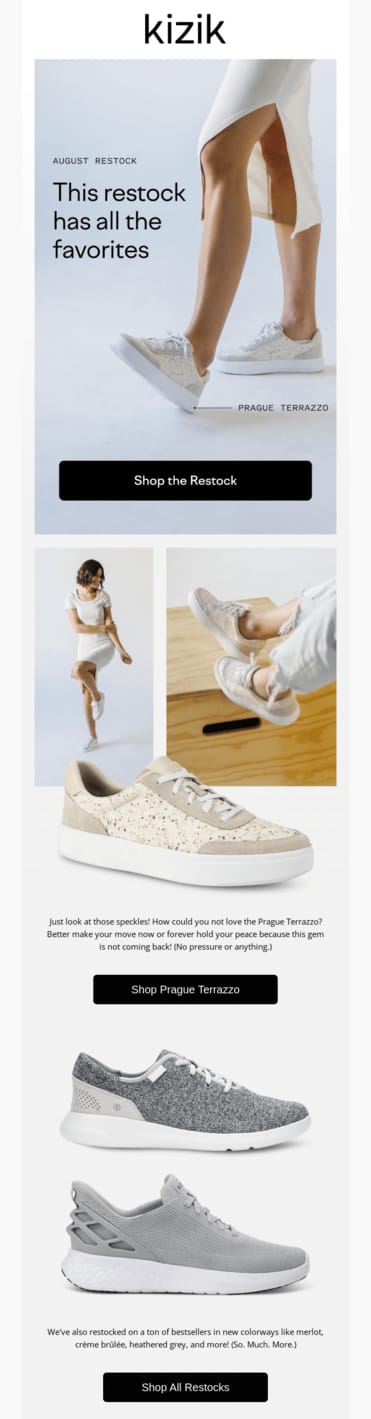
Send timely and personalized messages that fit their buying habits to bring them back before they forget about you, such as:
Restock reminders
Post-purchase flows
Winback campaigns
Here’s another example:
Let’s say you sell coffee pods and the average customer runs out in about 30 days.
Send a “Need a refill?” email around day 25 with a one-click reorder button. Better yet, add a small incentive like “Free shipping if you restock today.”
That tiny nudge can turn a one-time buyer into a monthly customer.
2. Upsell and cross-sell to raise your AOV
Getting people to buy more per order is one of the easiest ways to boost CLV (without adding new customers).
Use product bundles, cart add-ons, or perks like minimum spend free shipping.

Here’s another example:
Say someone adds a $40 serum to their cart.
At checkout, you recommend a $12 travel-sized cleanser with a note:
“Goes perfectly with your serum. And it’s 20% off right now!”
That’s an upsell that feels helpful, not pushy.
Or set a threshold: “Spend $60 for free express shipping.” You’d be surprised how many shoppers will add an extra item just to hit the goal.
3. Launch a loyalty or referral program
CLV skyrockets when people feel rewarded for sticking around.
And when they bring friends with them.
Offer points for purchases, birthday discounts, VIP perks, or free products for referrals.

Here’s another example:
A natural skincare brand launches a rewards program.
Shoppers earn points with every purchase, plus bonuses for reviews and referrals. One-time buyers become loyal fans, shopping more often to unlock the next reward tier.
And referred customers? They tend to spend more and stick around longer!
4. Personalize everything
Personalization isn’t just about slapping someone’s name on an email. It’s about tailoring the experience to their preferences, history, and habits.
Use past purchase data to recommend relevant products, trigger personalized flows, or create dynamic landing pages based on user behavior.

Here’s another example:
Someone buys baby shampoo from your store.
Instead of recommending unrelated hair gel, follow up with:
“You might love our gentle baby lotion, too.”
Relevance builds trust. And trust leads to repeat purchases.
5. Fix the leaks
Sometimes CLV isn’t about doing more. It’s about doing less wrong.
Identify where customers drop off in their journey
Run surveys to ask why people didn’t come back
Then, plug the gaps with better support, onboarding, or communication.
Here’s an example:
A cleaning brand noticed many one-time buyers never placed a second order.
After digging, they found that confusing refill instructions led to frustration.
They added a how-to video + simplified the packaging.
Boom! Repurchase rates jumped.
Final Thoughts
If you want your store to grow profitably (and sustainably), CLV is the number to watch.
It tells you:
How much your average customer is worth
How smart your acquisition spend really is
Where to double down and where to course-correct
And the best part? It’s not some complicated black-box metric. Once you know the inputs, you can tweak and test your way to a higher CLV and a healthier business.
So go ahead, do the math. And build a brand customers keep coming back to.
The eCom Email Marketer Newsletter
Subscribe for your weekly dose of retention strategy, actionable insights, & exclusive industry news!



The eCom Email Marketer Newsletter
Subscribe for your weekly dose of retention strategy, actionable insights, & exclusive industry news!